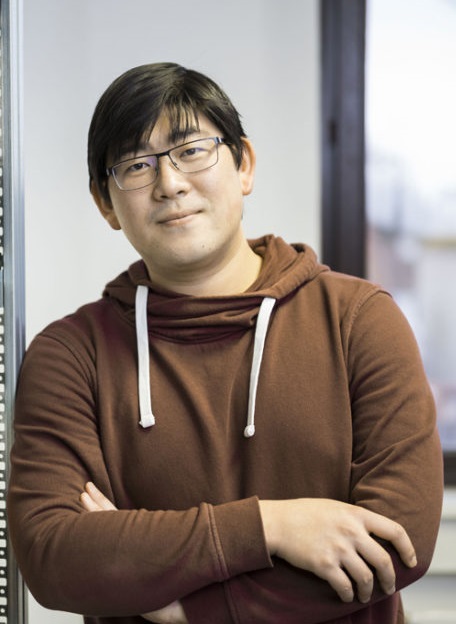
Ji-Ung Lee
Hi, I’m Ji-Ung, a postdoc at the research training group (RTG) Neuroexplicit Models at the University of Saarland (Germany). My research revolves around developing models that humans can understand and interact with. This involves aspects such as interpretability, steerability, model efficiency, and faithfulness. Besides, I am interested in open education, ethics, and citizen science. If you are interested in these topics feel free to drop me a message!
News
07-2026 - Paper accepted at COLM
Fork-Think with Confidence Zena Al-Khalili, Rafi Hakim, Dietrich Klakow, Ji-Ung Lee. 2026.
In this work, we propose a simple modification to existing inference scaling methods and show that instead of sampling from the very first token, we can also sample at later tokens, saving substantial amounts of compute while maintaining a performance comparable to parallel thinking.
06-2026 - Half-day workshop at Forschungstage Informatik
Together with Mareike Hartmann, we organized a half-a day workshop at Forschungstage Informatik, a multi-day event with young talents who passed the second round of the national computer science competition for school students. Our workshop taught them about how modern LLMs and agents are trained and allowed them to experiment with different contemporary agents.
03-2026 - RTG Spring Workshop
I had the pleasure to kick-off this year’s spring workshop with a talk on a neuroexplicit perspective, developed together with Wolfgang, Max, Chaahat, and Nektarios. Together with talks from Alexander Koller, Vera Demberg, Bernt Schiele, Christian Theobalt, Mariya Toneva, and Jilles Vreeken, we had lots of fun discussing how we can put different types of neuroexplicit models in relation to each other as well as what their strenghts and weaknesses may be.
01-2026 - Paper accepted at ICLR
Bridging Fairness and Explainability: Can Input-Based Explanations Promote Fairness in Hate Speech Detection? Yifan Wang, Mayank Jobanputra, Ji-Ung Lee, Soyoung Oh, Isabel Valera, Vera Demberg. 2026.
In this work, we study the use of input-based explanations for promoting fairness in the context of hate-speech detection and find that input-based explanations 1) can effectively detect biased predictions, 2) serve as useful supervision for reducing bias during training, 3) are not reliable predictors to identify fair models.
01-2026 - Guest Lecture: Ethics in NLP
I gave another guest lecture on Ethics in NLP at the Computational Linguistics course from Alexander Koller. The talk first introduced multiple aspects regarding ethics, ethical research, and the increasing impact of NLP on the society. We then talked about how biases (in data and models) as well as various aspects of privacy. This time, we closed with a very interesting discussion round centered around the dual use of AI.
12-2025 - Paper accepted at TMLR (paper)
B-cos LM: Efficiently Transforming Pre-trained Language Models for Improved Explainability. Yifan Wang, Sukrut Rao, Ji-Ung Lee, Mayank Jobanputra, Vera Demberg. 2025.
In this work, we propose different adaptation techniques to B-cosify language models. In contrast to conventional models, B-cos models promote input-faithfulness by replacing linear transformations with B-cos transforms. Our experiments show that pre-trained encoder- and decoder-only models can be transformed into B-cos versions of themselves while maintaining a high performance. We further find that—in contrast to vision tasks that benefit from a high input locality—lower locality is more beneficial for language tasks.
11-2025 RTG Retreat
In the first retreat with the fully grown RTG of 24 PhD students, we had multiple poster sessions with lots of interesting research, many introduction talks, and two panels moderated by Wolfgang Stammer and me. We also hosted two great guests, Mor Geva Pipek who talked about mechanistic interpretability and Luca Bortolussi who gave a talk on learning signal temporal logic formulae. Besides research, we also had a great time at our half-day trip to the Völklinger Hütte.
07-2025 Attending ACL 2025
At ACL 2025 in Vienna, I had the pleasure to catch up with many former colleagues from TU Darmstadt and to also meet new people and discuss research. One of the highlights was the panel discussion, moderated by Ed Hovy and his concerns about ‘LLM popcorn research’.
04-2025 RTG Spring Workshop
Kicked-off by a one-day tutorial on probabilistic circuits by Antonio Vergari, we had a great two-day workshop with discussions themed around design challanges of neuroexplicit models.
02-2025 - Full-day workshop on research data management (linkedin)
I gave a workshop on research data management at our RTG. The workshop covered various aspects around the collection, processing, and storage of research data, and also provided insights on how to conduct reproducible research, especially when working with neural models. The workshop ended with a fruitful discussion where we decided upon practical guidelines for our RTG.
01-2025 - Guest Lecture: Ethics in NLP
I gave a guest lecture on Ethics in NLP at the Computational Linguistics course from Alexander Koller. The talk first introduced multiple aspects regarding ethics, ethical research, and the increasing impact of NLP on the society. We then talked about how biases (in data and models) as well as various aspects of privacy. Finally, we closed with a very interesting discussion round touching upon a broad range of other topics.